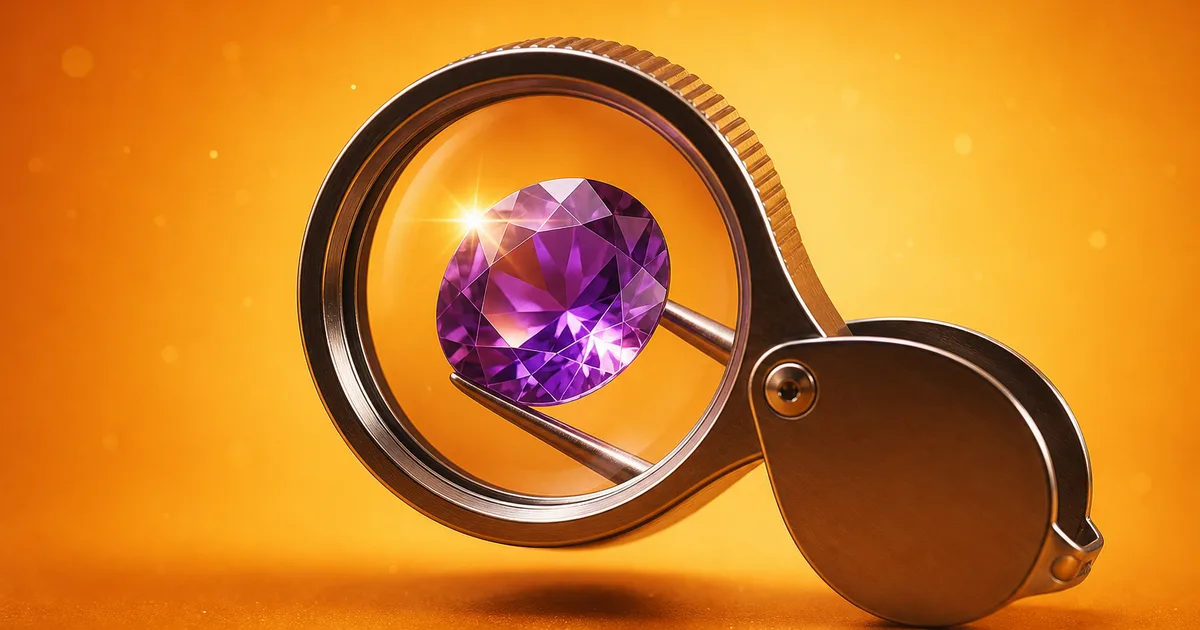
Real gemstones and convincing fakes (glass, plastic and lab-made stones) can look alike at a glance, but a few simple checks separate most of them. None is foolproof on its own, so use several together, and get valuable stones professionally certified.
Look for bubbles and flawless perfection
Hold the stone to the light with a loupe. Tiny round bubbles inside usually mean glass or resin, not a natural gem. Natural stones almost always have small inclusions; a stone that is utterly flawless and very cheap is a red flag for an imitation.
Test hardness
Most popular gems are hard. A genuine sapphire, ruby or topaz will scratch glass; many fakes will not. Test carefully on an inconspicuous spot, since a softer real stone can also scratch. See our Mohs scale guide for safe testing.
Check weight and temperature
Many gems feel denser than glass of the same size, and real stones tend to feel cold and warm up slowly, while glass and plastic warm quickly. Diamonds disperse heat fast, which is the basis of a thermal tester.
Inspect the cut, color and setting
Real gems are usually cut with crisp, even facets; fakes can look rounded or fuzzy at the edges. Perfectly uniform color with no variation can indicate dye or glass. And a precious gem set in cheap base metal is worth a second look.
When to get it certified
These tests catch obvious fakes, but lab-grown stones can be chemically identical to natural ones and only a gemological lab can tell them apart. For anything valuable, get an independent certificate. To narrow down what a stone likely is first, the gemstone identifier gives a fast read and flags common lookalikes.
Frequently asked questions
How can I tell if a gemstone is real at home?
Do real gemstones have flaws?
Can an app tell if a gem is real?
Stop guessing, identify it in seconds with GeoLens.