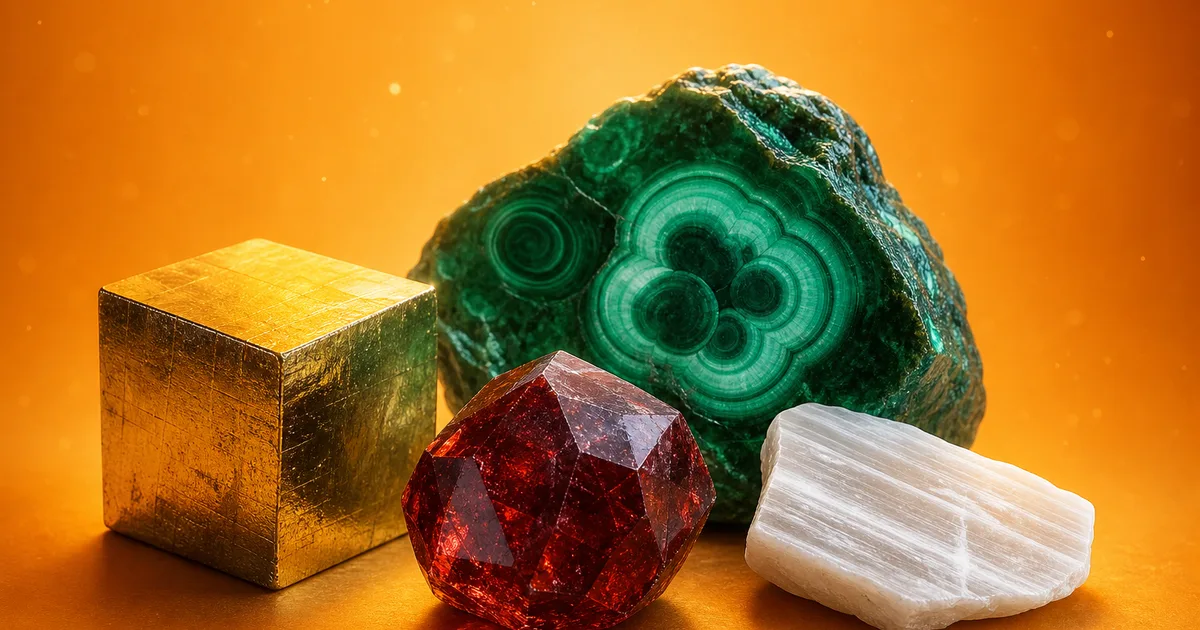
Mineralogists identify minerals with a small set of physical tests that, together, point to one species. You can run most of them at home with a coin, a knife and an unglazed tile. Here are the tests that matter and the order to use them.
Hardness
Hardness is the first and most powerful test. Using the 1 to 10 Mohs scale, find what scratches the mineral and what it scratches: a fingernail (about 2.5), a copper coin (about 3.5), a steel knife or glass (about 5.5). This alone separates soft minerals like talc from hard ones like quartz. Full method in our Mohs scale guide.
Streak
Rub the mineral on an unglazed porcelain tile and look at the powder color. Streak is often more reliable than surface color: hematite can look grey or red but always streaks reddish-brown, while pyrite streaks greenish-black.
Luster
Describe how the surface reflects light. The big split is metallic (like polished metal: pyrite, galena) versus non-metallic (glassy, pearly, silky, dull, earthy). Luster quickly sorts minerals into two broad groups before you go further.
Cleavage and fracture
Cleavage is the tendency to break along flat planes; mica peels into sheets, halite breaks into cubes, calcite into rhombs. Minerals without cleavage fracture instead, often with a curved, shell-like surface like quartz. The way a mineral breaks is a strong identifier.
Specific gravity and other clues
Heft tells you a lot: galena and barite feel surprisingly heavy for their size. Magnetism (magnetite), a reaction with vinegar (calcite fizzes) and crystal shape round out the picture.
Let the app run the tests for you
Rock Identifier: GeoLens estimates these properties from a photo and reports the most likely mineral with a confidence score. Use the mineral identifier to confirm a hand identification or to start one when you have no tools.
Frequently asked questions
What are the main tests to identify a mineral?
What is a streak test?
Do I need special tools to identify minerals?
Stop guessing, identify it in seconds with GeoLens.